
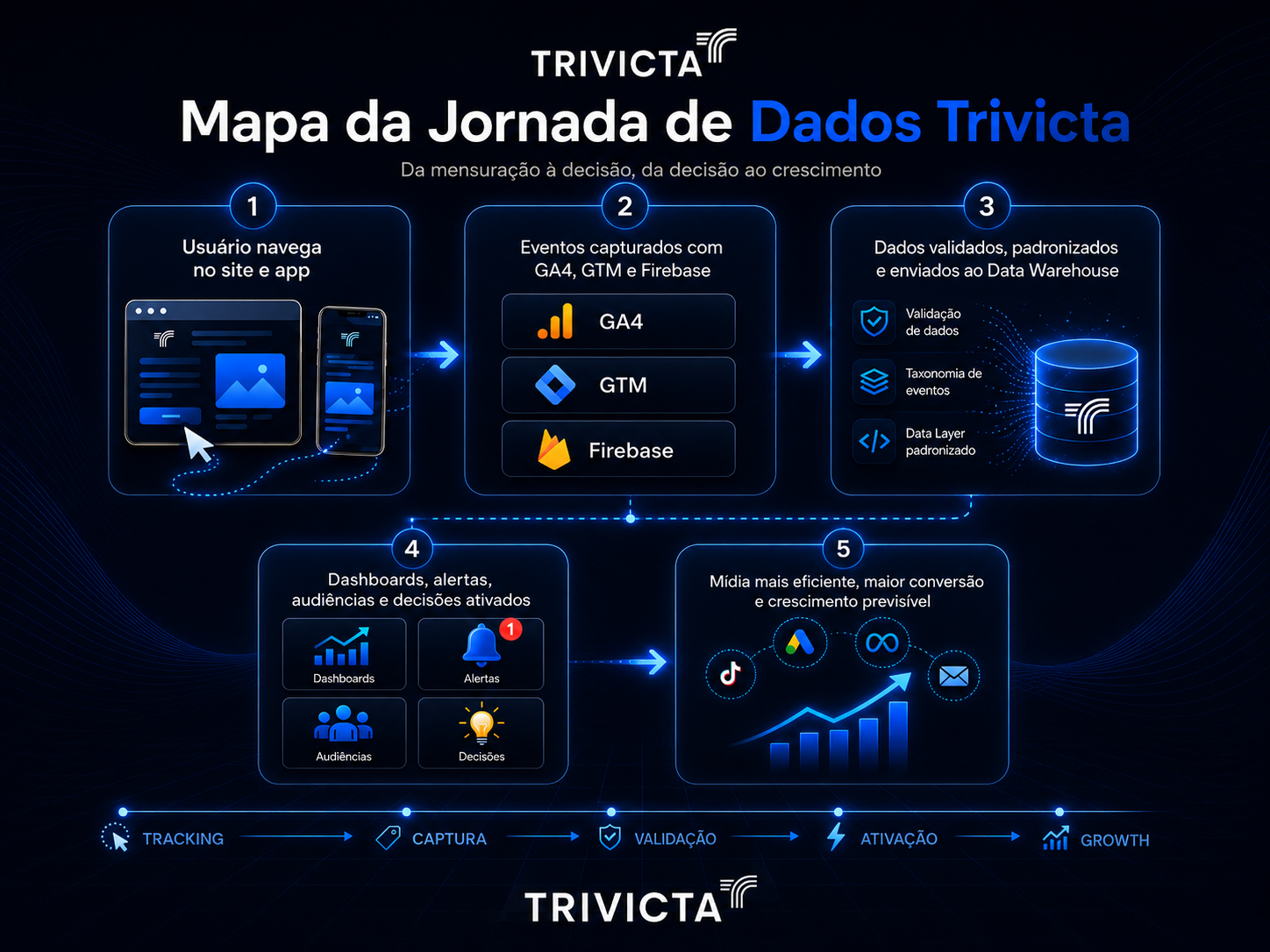
Implementamos e evoluímos arquiteturas de tracking com GA4, Google Tag Manager, Firebase, BigQuery e integrações de mídia para garantir dados confiáveis em toda a jornada
do primeiro clique à conversão, recompra e ativação de audiências.









.png)



Base de dados unificada e confiável
Integração de fontes e eliminação de inconsistências
Visão clara para decisões estratégicas
Dashboards e insights acionáveis para o negócio
Antecipação de riscos e oportunidades
Monitoramento contínuo com detecção de desvios
Mensuração avançada com GA4, Firebase e GTM
Coleta estruturada do comportamento do usuário para geração de insights e otimização de resultados em Web e App
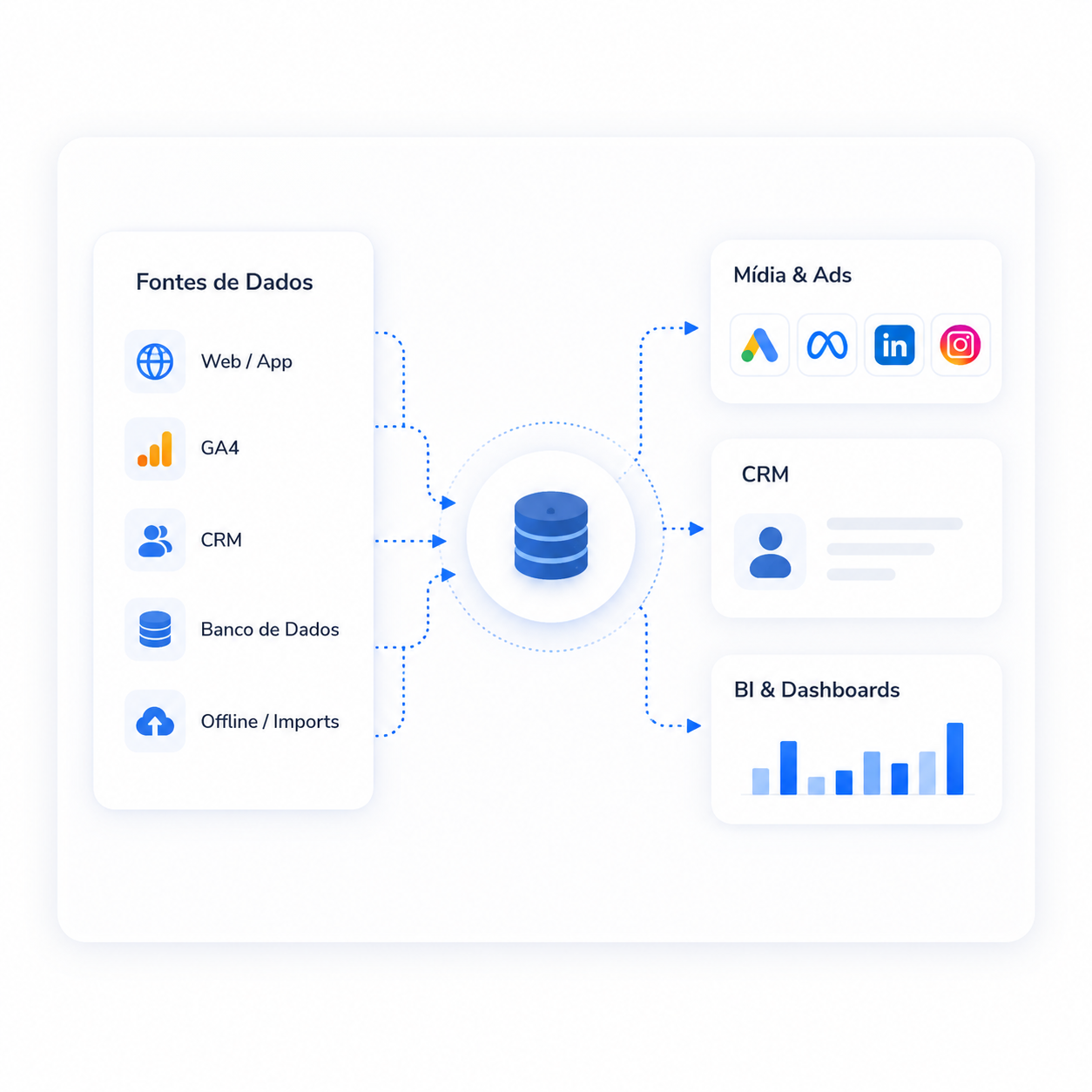
Mensuração avançada de mídia paga (Google, Meta, LinkedIn)
Dados integrados às plataformas de anúncios para aumentar performance e reduzir custo


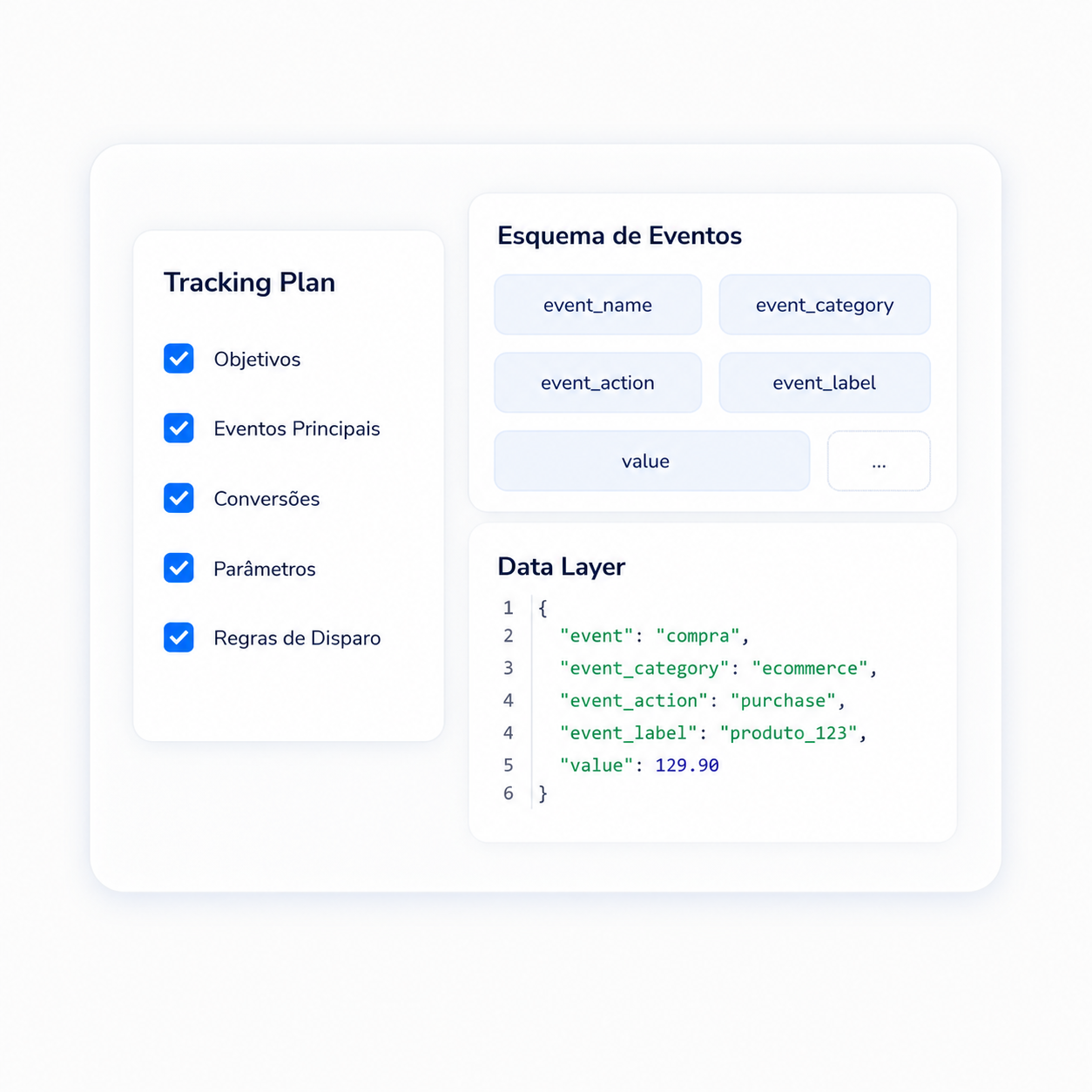

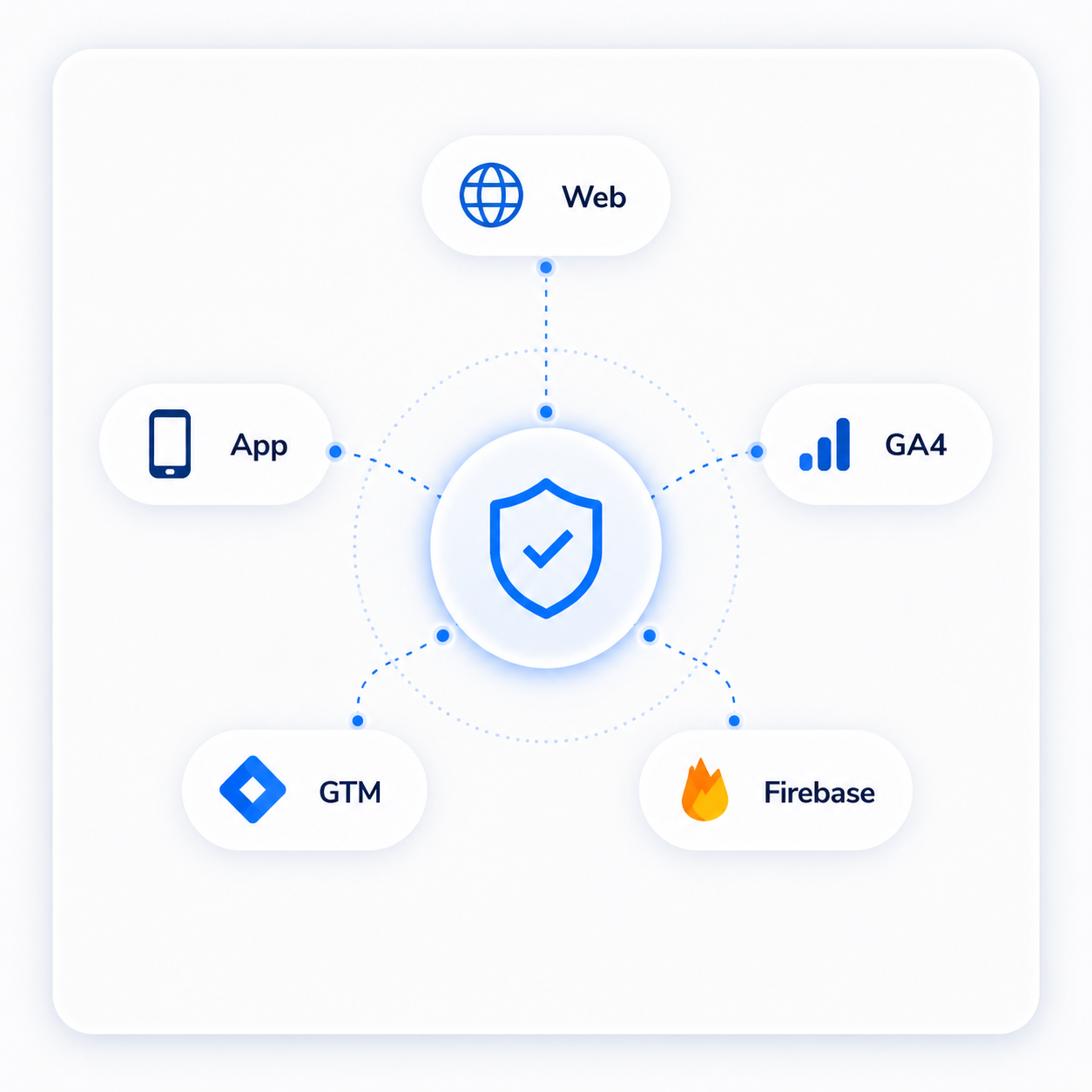

Uma empresa deve investir em Google Analytics 4 para ter mais clareza sobre o comportamento dos usuários em sites, aplicativos e campanhas digitais. O GA4 permite acompanhar eventos, conversões, jornadas, origem de tráfego, engajamento e resultados de marketing com mais precisão. Para empresas que dependem de mídia paga, geração de leads, e-commerce ou canais digitais, o Google Analytics 4 ajuda a tomar decisões mais confiáveis, reduzir desperdícios e entender quais ações realmente contribuem para o crescimento.
Uma empresa precisa de consultoria em Google Analytics 4 quando os dados estão inconsistentes, os eventos não estão bem configurados, as conversões não refletem a realidade do negócio ou a equipe não consegue transformar relatórios em decisões. A consultoria em GA4 ajuda a revisar a implementação, estruturar eventos, configurar conversões, organizar a mensuração da jornada e integrar os dados com ferramentas como Google Tag Manager, BigQuery, Looker Studio, CRM e plataformas de mídia.
Para escolher uma consultoria de Google Analytics 4, a empresa deve avaliar se o parceiro tem experiência em estratégia de dados, implementação técnica, governança, mídia, dashboards e leitura de negócio. Não basta configurar tags: é preciso entender como os dados serão usados para melhorar decisões de marketing, vendas e performance. As melhores consultorias de GA4 combinam conhecimento técnico com visão estratégica, ajudando a empresa a sair de relatórios isolados para uma operação orientada por dados confiáveis.
Uma consultoria em Google Analytics 4 resolve problemas como eventos duplicados, conversões mal configuradas, perda de dados, baixa qualidade no tracking, ausência de padrão na nomenclatura, relatórios inconsistentes e dificuldade para conectar mídia, site, aplicativo, CRM e receita. Além disso, uma boa consultoria ajuda a criar uma estrutura analítica mais madura, com documentação, validação contínua, dashboards executivos e indicadores alinhados aos objetivos reais da empresa.
As melhores consultorias de Google Analytics 4 não se limitam à configuração da ferramenta. Elas conectam GA4, Google Tag Manager, BigQuery, Looker Studio, CRM e plataformas de mídia para criar uma visão integrada da jornada do cliente. Também atuam com governança de dados, auditoria contínua, definição de KPIs, análise de funil, mensuração de campanhas e recomendações estratégicas para melhorar conversão, eficiência de mídia e previsibilidade de crescimento.


